What Is SIM Swap Fraud: Mechanism, Risk and Mitigation
The attacker does not steal your phone; they convince your carrier to route your number to a device they control, bypassing device-bound security entirely.
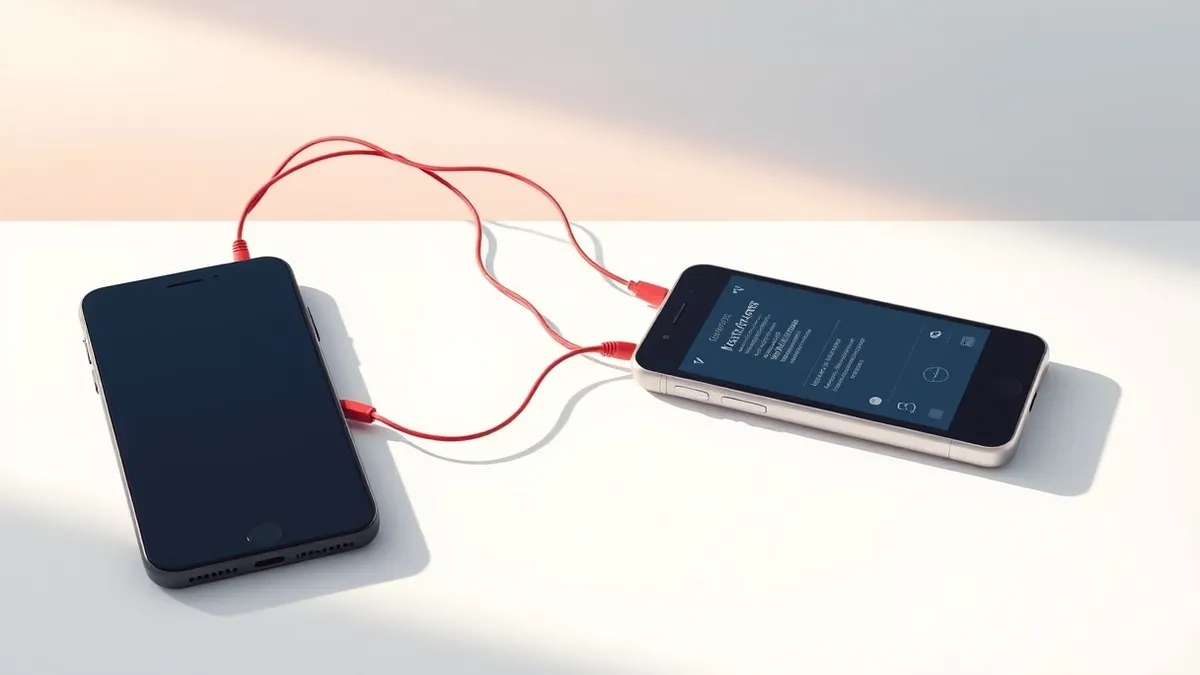
SIM swap fraud is an attack where an adversary tricks a mobile carrier into transferring your phone number to a new SIM card they possess. This redirects your text messages and calls to their device. Attackers use this access to intercept two-factor authentication codes and take over your accounts. You must secure your account with the carrier and use app-based verification instead of SMS.
Understanding the SIM Swap Mechanism
A SIM swap occurs when an attacker convinces a mobile network operator to deactivate your existing subscriber identity module and activate a new one under their control. The subscriber identity module is the small chip in your phone that authenticates you to the cellular network. It tells the tower who you are. The attacker does not need physical access to your device. They need enough personal information to impersonate you to customer support.
The attacker gathers your data through public records, social media or previous data breaches. They call or visit a carrier store. They claim your phone is lost or damaged. They request a replacement SIM card. If the carrier’s verification process is weak, the staff member approves the transfer. Your phone loses signal immediately. The attacker’s phone receives your calls and texts.
This attack exploits the trust the carrier places in human verification. It assumes the person asking for a SIM replacement is the account holder. The technical mechanism is simple: reassigning a phone number to a new hardware token. The security failure lies in the administrative process, not the cryptography of the phone network.
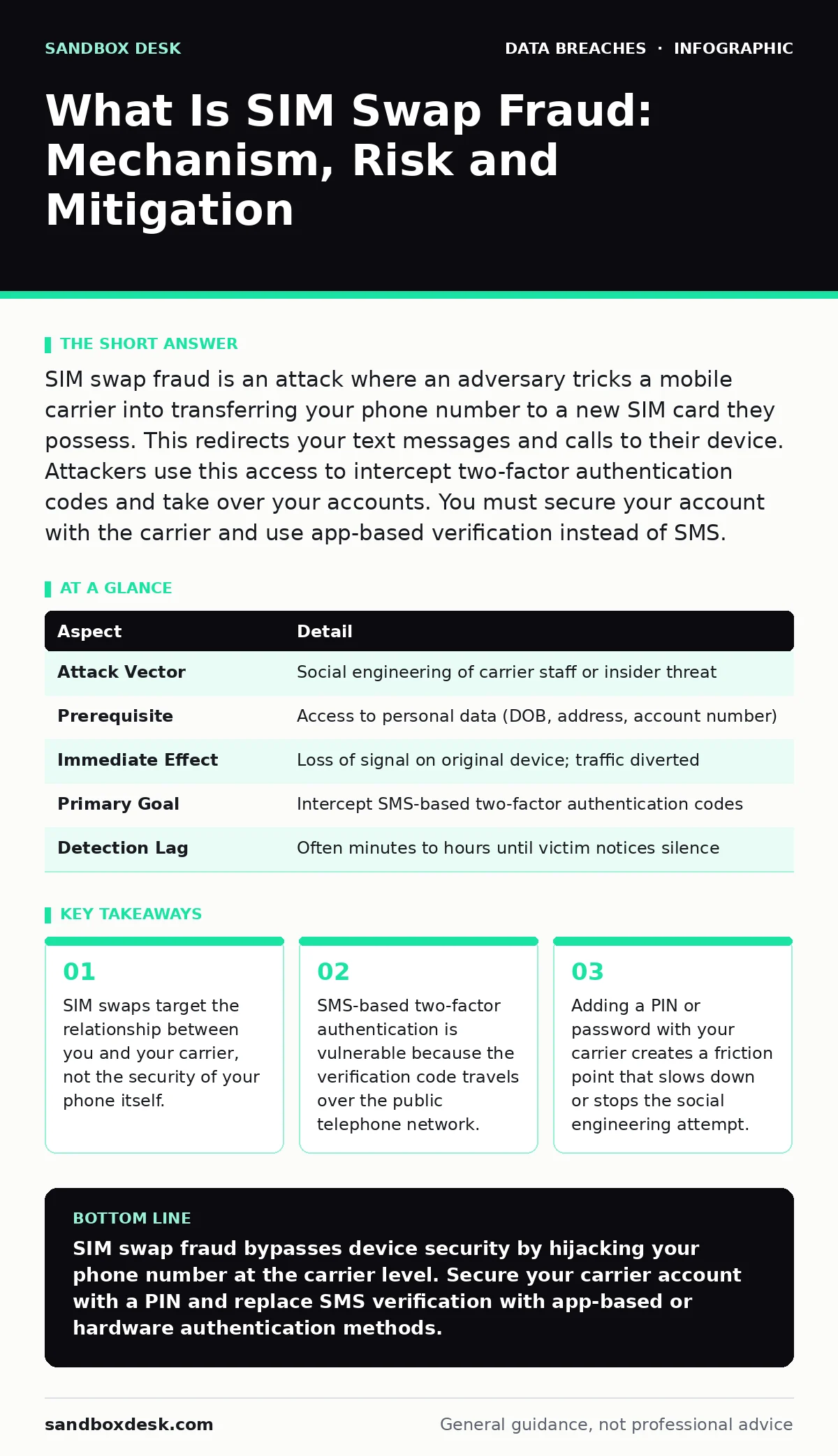
| Aspect | Detail |
|---|---|
| Attack Vector | Social engineering of carrier staff or insider threat |
| Prerequisite | Access to personal data (DOB, address, account number) |
| Immediate Effect | Loss of signal on original device; traffic diverted |
| Primary Goal | Intercept SMS-based two-factor authentication codes |
| Detection Lag | Often minutes to hours until victim notices silence |
Why SMS Verification Is the Weak Link
Many services use short message service for two-factor authentication. This method sends a numeric code to your phone via text message. The assumption is that only you possess the phone. This assumption breaks during a SIM swap. The code arrives on the attacker’s device. The attacker enters the code to reset your password or approve a transaction.
SMS was never designed for security. It travels over signaling channels that are not encrypted end-to-end. Interception is possible at the network level. SIM swapping is a more targeted form of interception. It does not require tapping cables. It requires convincing a human to change a database entry. The result is the same: the attacker controls the delivery channel for your verification codes.
Using an authenticator app instead of SMS removes this dependency. Authenticator apps generate codes locally on your device. They do not rely on the cellular network to deliver the secret. A SIM swap has no effect on time-based one-time passwords generated offline. This shift moves the trust boundary from the carrier to your device.
Who Is Most at Risk
Anyone with a mobile phone is technically vulnerable. High-value targets face greater risk. These individuals often have more public data available. They may also control accounts with significant financial or professional impact. Cryptocurrency holders are frequent targets because transactions are irreversible. Bank customers are targeted for fund transfers.
Executives and public figures attract attention. Their personal details are easier to find. Attackers may monitor their social media for travel or device loss announcements. These events provide cover for the swap request. A "lost phone" claim seems more plausible when the victim is abroad.
Corporate employees face indirect risk. Attackers may target staff to pivot into company systems. If an employee uses SMS for work account verification, the attacker gains entry. This connects SIM swap fraud to broader concerns about shadow IT data exposure. Unmonitored accounts and weak verification methods create entry points for lateral movement.
The Role of Data Exposure
Attackers need personal information to pass carrier verification. This data often comes from previous breaches. Attackers aggregate fragments from different sources. They combine your name, date of birth and address. They may also obtain your account number or frequent travel destinations.
Data scraping tools automate the collection of public information. Social media profiles often contain enough detail for a basic impersonation. Data retention policies at other companies may leave your information exposed long after you leave. The longer your data sits in insecure databases, the higher the chance it reaches an attacker.
Understanding data loss prevention principles helps reduce this exposure. While you cannot control third-party breaches, you can limit what you share publicly. Reducing the amount of identifiable data online makes impersonation harder. It does not eliminate the risk, but it raises the barrier for entry.
What People Usually Get Wrong
Many believe that keeping their phone safe prevents SIM swaps. This is incorrect. The attack targets the carrier’s records, not the physical device. A locked phone provides no protection against a number transfer. Security software on the phone cannot stop the network from routing your traffic elsewhere.
Another misconception is that PIN codes on phones are sufficient. A screen lock protects the device contents. It does not protect the phone number itself. The attacker never touches your phone. They interact with the carrier. Your device settings are irrelevant to the success of the swap.
Some assume that changing their number regularly helps. This is impractical and does not stop the initial breach. The attacker targets your identity, not just the number. They can request a swap to a new number if they have enough personal data. The key is strengthening the carrier’s verification process, not hiding the number.
See also: Data Scraping Meaning: How Automated Extraction Works and What It Costs · Log Retention Strategy: Benefits, Limits, and When to Stop
Concrete Steps to Mitigate Risk
You must act on two fronts. First, secure your relationship with the carrier. Second, reduce reliance on SMS for verification.
- Contact your mobile carrier. Request a SIM protection PIN or account password. This adds a second layer of verification for any changes to your account. The carrier must verify this PIN before swapping a SIM.
- Remove SMS as a two-factor authentication method. Use an authenticator app or hardware security key for sensitive accounts. These methods do not depend on the cellular network.
- Limit public personal data. Review your social media privacy settings. Remove dates of birth and home addresses from public profiles.
- Monitor for service loss. If your phone loses signal unexpectedly, contact your carrier immediately. Use a secondary device to call them.
Handling a Suspected Swap
If your phone loses signal and you do not plan to be offline, suspect a swap. Do not panic. The attacker needs time to act. Speed is your advantage.
Use a different device to contact your carrier. Call from a friend’s phone or use Wi-Fi calling if available. Report the unauthorized SIM change. Demand immediate reversal. The carrier can deactivate the attacker’s SIM and restore yours.
Check your critical accounts. Look for password reset emails. If you see unauthorized activity, change passwords from a secure device. Enable additional verification methods. Contact your bank if financial accounts are involved.
Imagine you are traveling and your phone suddenly shows no service. You try to call home but cannot reach anyone. You check your email on a laptop and see a password reset request for your banking app. This pattern suggests a SIM swap. The attacker has your number and is attempting to bypass security. Immediate action with your carrier can stop the process before funds are moved.
Long-Term Security Posture
SIM swap fraud highlights the fragility of trust in telecommunications. You rely on carriers to protect your identity. They rely on human verification. This chain is weak.
Shift your security model away from network-dependent verification. Use standards that do not require SMS. FIDO2 security keys provide phishing-resistant authentication. They bind the verification to the physical device. A SIM swap cannot bypass a hardware key.
Review your email account compromise risks. Email is often the key to resetting passwords for other services. If an attacker gains your email, they can reset your banking passwords. Protect email with strong, non-SMS verification.
Consider data subject rights in your region. You may have the right to request deletion of your personal data from certain services. This reduces the amount of information available for attackers to aggregate. It does not stop all breaches, but it limits the fuel for social engineering.
Key takeaways
- SIM swaps target the relationship between you and your carrier, not the security of your phone itself.
- SMS-based two-factor authentication is vulnerable because the verification code travels over the public telephone network.
- Adding a PIN or password with your carrier creates a friction point that slows down or stops the social engineering attempt.
SIM swap fraud bypasses device security by hijacking your phone number at the carrier level. Secure your carrier account with a PIN and replace SMS verification with app-based or hardware authentication methods.
Frequently asked questions
Can I detect a SIM swap in progress?
You cannot detect the preparation phase. The first sign is usually your phone losing cellular signal unexpectedly. If this happens without a network outage, contact your carrier immediately using a different method.
Does using a secure messaging app prevent SIM swaps?
No. Secure messaging apps protect the content of your messages. They do not prevent the attacker from owning your phone number. The attacker can still intercept SMS codes sent to that number for other services.
Are prepaid phones safer from SIM swaps?
Prepaid phones may have less personal data tied to them, making initial impersonation harder. However, they are still vulnerable if the attacker obtains enough identification. The security depends on the carrier’s verification process, not the payment model.
How long does it take to recover from a SIM swap?
Recovery speed depends on the carrier. Once reported, they can often deactivate the attacker’s SIM within hours. Restoring your service may take longer. You should have a backup plan to contact critical services during this window.
How this guide was produced: written by the Sandbox Desk editorial team with AI assistance, checked against the public references listed below, and reviewed when the facts change. See our editorial policy or report an error.