Tax Identity Theft: How Stolen Data Becomes Fraudulent Returns
Tax identity theft succeeds because revenue agencies often process the first valid return they receive, locking out the legitimate taxpayer until the next filing window opens.

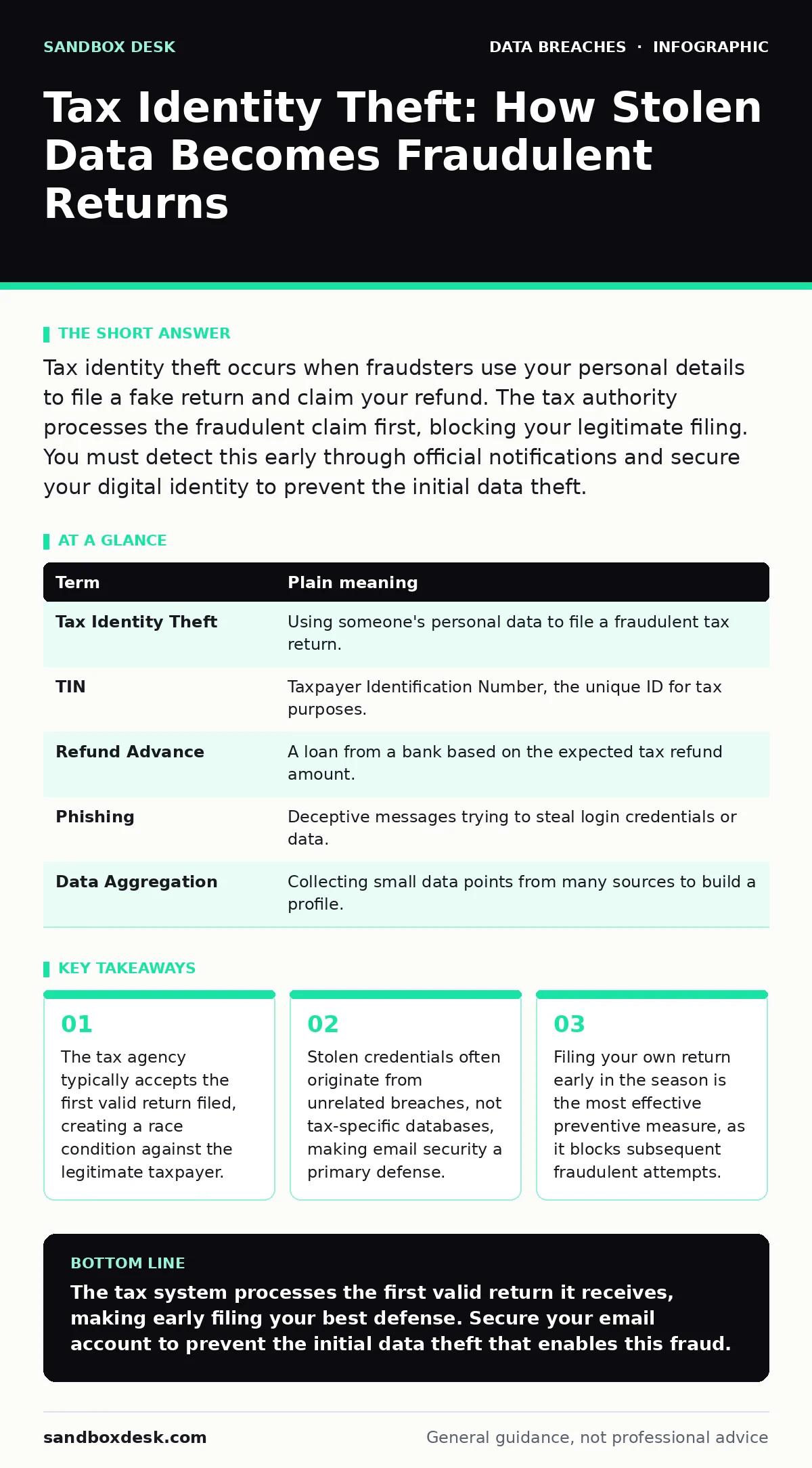
Tax identity theft occurs when fraudsters use your personal details to file a fake return and claim your refund. The tax authority processes the fraudulent claim first, blocking your legitimate filing. You must detect this early through official notifications and secure your digital identity to prevent the initial data theft.
The Mailbox Analogy
Imagine your tax identity is a physical mailbox on your front lawn. The tax authority delivers your official refund check to this box. If a stranger finds your address and name, they can install a second, identical mailbox nearby. They place a note in their box saying they are the owner. When the mail carrier arrives, they see two boxes. The carrier follows a strict rule: deliver the mail to the first box they encounter or the one that looks most official. If the fraudster’s box is set up first, they get the check. You arrive later, find no mail, and must prove the other box is fake. This delay costs you time and money while the fraudster spends your refund.
Key Terms Defined
Understanding the mechanics requires precise language. These terms define the scope of the threat.
| Term | Plain meaning |
|---|---|
| Tax Identity Theft | Using someone's personal data to file a fraudulent tax return. |
| TIN | Taxpayer Identification Number, the unique ID for tax purposes. |
| Refund Advance | A loan from a bank based on the expected tax refund amount. |
| Phishing | Deceptive messages trying to steal login credentials or data. |
| Data Aggregation | Collecting small data points from many sources to build a profile. |
The Race to File
The core vulnerability is the first-come, first-served processing rule. Revenue agencies are designed to handle millions of filings efficiently. They cannot manually verify every return before processing. They accept the first submission that matches their records. If a fraudster files a return using your Social Security number or TIN, the system marks your identity as "used." When you attempt to file, the system rejects your submission. You are now locked out. You must contact the agency to resolve the conflict. This process takes weeks or months. Meanwhile, the fraudster has already received the funds.
Where the Data Comes From
Fraudsters rarely hack the tax authority directly. The agency’s data is well-protected. Instead, they buy or steal data from weaker links in the chain. This is where email account compromise becomes a critical vector. If you reuse passwords, a breach at a forum or a retail site can expose your credentials. Once inside your email, the attacker can reset passwords for your bank and tax software. They can also read verification codes sent to your inbox.
This connects to data inventory and mapping. If you do not know where your personal data lives, you cannot protect it. Attackers use combo lists, which are collections of username and password pairs from various breaches. They try these combinations against your accounts. If you use the same password everywhere, one breach compromises your entire digital life.
The Hidden Cost of Convenience
Many users enable automatic filing or use third-party preparers for convenience. These services require access to your sensitive data. If the service provider suffers a backup data exposure or shadow IT data exposure, your information is at risk. You are trusting a third party with your keys.
Imagine you use a popular tax preparation app. It stores your data on its servers. If those servers are breached, your data joins the dark web markets. You did nothing wrong, but your identity is now compromised. The fraudster does not need to hack you; they just need to hack the company you trusted. This is why minimizing the number of services that hold your data is a valid security strategy.
See also: Log Retention Strategy: Benefits, Limits, and When to Stop · Data Leakage vs Data Exfiltration: Difference, Detection and Prevention
Simple Safety Habits
You cannot stop all attacks, but you can raise the cost for attackers. These steps reduce your exposure.
- File your return as early as possible. This blocks the fraudster from filing first.
- Monitor your email for official notices from the tax authority. They will alert you if a return has been filed using your ID.
- Use unique passwords for your email and financial accounts. This prevents combo lists from working against you.
What To Do If It Happens
If you receive a notice that a return was filed in your name, act immediately. Do not ignore it. Contact the tax authority to file an identity theft affidavit. This freezes your account and prevents further fraudulent filings. You will need to file a paper return for that year. This is slower and more tedious, but it is necessary.
Consider identity theft protection services if you have high-risk data exposure. These services monitor your data on the dark web. They alert you if your information appears in new breaches. This gives you early warning before the fraud occurs.
Beyond the Tax Return
Tax identity theft is rarely isolated. The same data used for taxes can be used for loans, medical services, or housing applications. This is why healthcare data breaches are so dangerous. Medical records contain the same identifiers as tax records. If your medical data is stolen, your tax identity is also at risk.
Understanding data subject rights can help you control your data. You can request that companies delete your data or restrict its use. This reduces the amount of information available to attackers. It is a slow process, but it limits your digital footprint.
Key takeaways
- The tax agency typically accepts the first valid return filed, creating a race condition against the legitimate taxpayer.
- Stolen credentials often originate from unrelated breaches, not tax-specific databases, making email security a primary defense.
- Filing your own return early in the season is the most effective preventive measure, as it blocks subsequent fraudulent attempts.
The tax system processes the first valid return it receives, making early filing your best defense. Secure your email account to prevent the initial data theft that enables this fraud.
Frequently asked questions
Will the tax agency notify me if someone files a return with my ID?
Yes, the agency will send a notice to the address on file if a return has already been processed for your identification number.
Can I still get my refund if I am a victim?
Yes, but you must resolve the identity theft issue first. You will likely need to file a paper return after the fraud is cleared.
Does using a different password for every site help?
Yes, it prevents attackers from using stolen credentials from one breach to access your email or tax accounts.
Is tax identity theft common?
It is a persistent threat because the financial reward is high and the processing rules are rigid.
How this guide was produced: written by the Sandbox Desk editorial team with AI assistance, checked against the public references listed below, and reviewed when the facts change. See our editorial policy or report an error.