Account Takeover vs Identity Theft: The Critical Difference
Account takeover steals access to existing services, while identity theft fabricates a new persona to open fresh accounts.

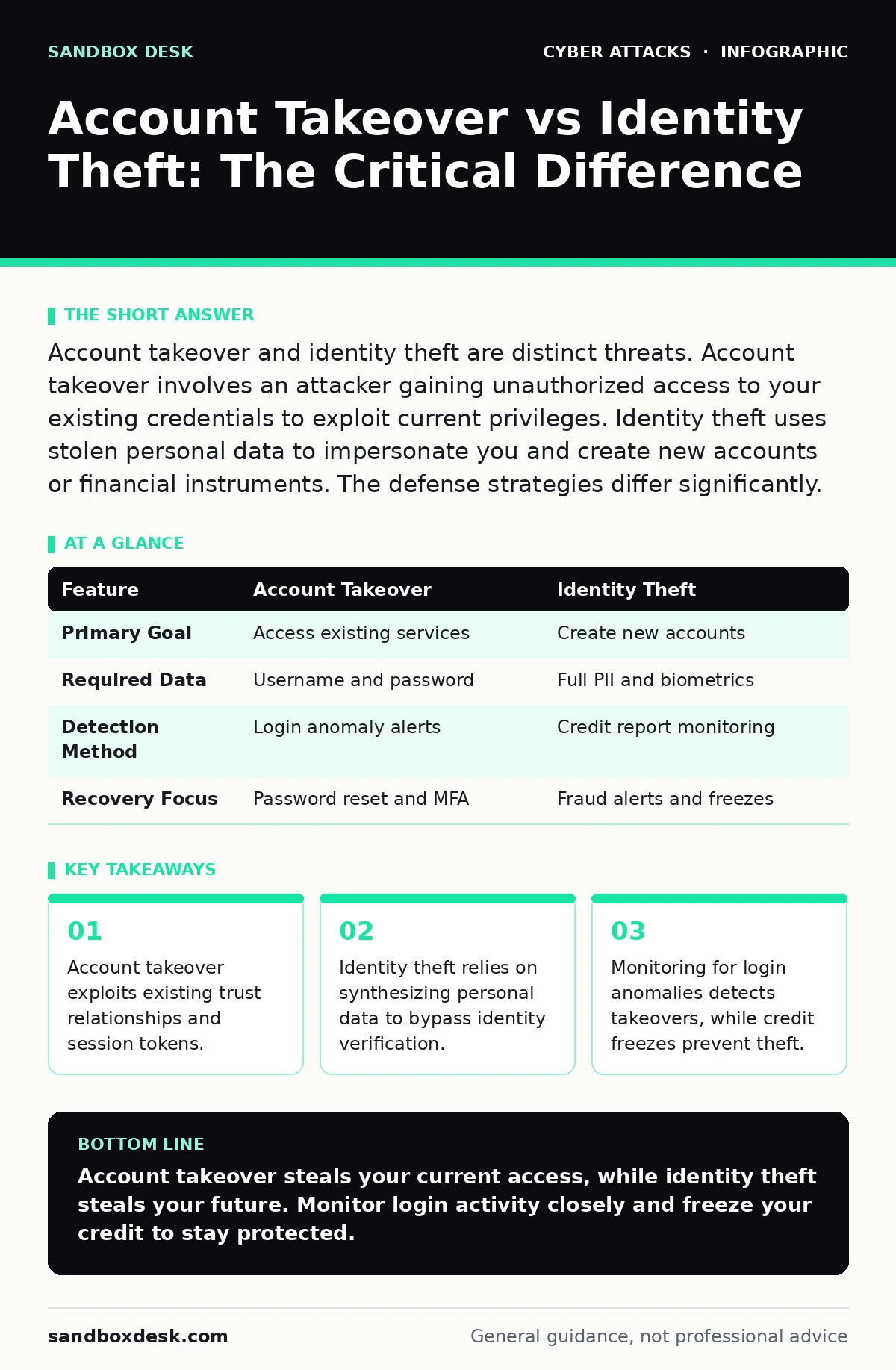
Account takeover and identity theft are distinct threats. Account takeover involves an attacker gaining unauthorized access to your existing credentials to exploit current privileges. Identity theft uses stolen personal data to impersonate you and create new accounts or financial instruments. The defense strategies differ significantly.
What is the difference between account takeover and identity theft?
Account takeover and identity theft represent two different ends of the compromise spectrum. Account takeover occurs when an attacker gains access to an existing account you already own. The attacker uses your valid credentials to perform actions within the boundaries of your established permissions. Identity theft involves an attacker using your personal information to create new accounts or obtain credit in your name. The attacker is building a new digital identity from scratch rather than hijacking an old one.
How does account takeover actually work?
Attackers typically gain entry through credential stuffing or phishing campaigns. Credential stuffing involves using lists of username and password pairs from previous data breaches to guess access to other services. Many users reuse passwords across multiple platforms, making this method effective. Once inside, the attacker may change the recovery email or enable two-factor authentication on their own device. This locks the legitimate user out while the attacker maintains persistent access to the compromised resources.
What triggers identity theft attacks?
Identity theft requires a deeper collection of personally identifiable information. Attackers need your full name, date of birth, social security number, or other government-issued identifiers. They use this data to pass knowledge-based authentication checks required by banks or lenders. The goal is often financial gain through new loans or credit cards. Unlike account takeover, the victim may not notice the breach until they receive a denial for a legitimate application or see unfamiliar accounts on their credit report.
Which attack vector is more dangerous?
The danger depends on your specific risk profile and the value of your digital assets. Account takeover is immediate and disruptive. It can lead to direct financial loss if the account holds funds or payment methods. It also exposes private communications and contacts. Identity theft causes long-term reputational and financial damage. It requires extensive effort to clear your name and close fraudulent accounts. Both scenarios demand different monitoring strategies and response procedures.
| Feature | Account Takeover | Identity Theft |
|---|---|---|
| Primary Goal | Access existing services | Create new accounts |
| Required Data | Username and password | Full PII and biometrics |
| Detection Method | Login anomaly alerts | Credit report monitoring |
| Recovery Focus | Password reset and MFA | Fraud alerts and freezes |
Why do standard defenses fail here?
Standard password hygiene often fails against account takeover because of human behavior. Users frequently choose complex passwords that they then reuse across multiple sites. When one service suffers a breach, attackers test those credentials elsewhere. This is known as credential stuffing. Two-factor authentication helps, but it is not a silver bullet. Attackers can use session hijacking to bypass login checks entirely. They steal the session cookie that proves you are already logged in. This bypasses the need for a password or second factor.
See also: Email Account Compromise: How Attackers Steal Access and What You Can Do · Golden Ticket Attack Prevention Checklist for Identity Security
How can you detect an account takeover?
Detection relies on monitoring for unusual behavior rather than just failed login attempts. Look for logins from unfamiliar geographic locations or devices. Check for changes to security settings, such as new recovery emails or phone numbers. Review recent transaction history for small test charges. Attackers often make small purchases to verify payment methods before draining accounts. If you notice these signs, assume the account is compromised. Change credentials immediately and revoke all active sessions. This forces the attacker to log in again, where they will be blocked by new security measures.
What prevents identity theft effectively?
Prevention focuses on limiting the availability of your personal data. Place a credit freeze on your reports with major bureaus. This stops lenders from accessing your credit file without your explicit permission. It does not affect your ability to check your own score. Monitor your credit reports regularly for new inquiries or accounts you did not open. Consider using a PO box for sensitive mail to prevent physical theft. Reduce your digital footprint by removing personal details from public profiles. The less data available, the harder it is for an attacker to pass identity verification checks.
How do these threats relate to other cyber risks?
Understanding these concepts helps you recognize broader patterns. For instance, vendor email compromise often starts with account takeover of a business email. Attackers use the compromised inbox to request fraudulent wire transfers. Similarly, dictionary attacks are a common method for achieving account takeover by guessing weak passwords. While BGP hijacking operates at the network level, it can redirect traffic to fake login pages, facilitating both theft types. Recognizing these connections allows for better security culture within organizations. It shifts the focus from isolated incidents to systemic risk management.
What should you do if compromised?
The response differs based on the type of breach. For account takeover, reset the password and enable multi-factor authentication immediately. Revoke all active sessions to kick out the attacker. Check for unauthorized changes to recovery options. For identity theft, contact credit bureaus to place freezes. File a report with local law enforcement to create a paper trail. Notify financial institutions to close fraudulent accounts. Document every step for future disputes. Consider professional identity restoration services if the fraud is complex. Speed is critical in both scenarios to limit damage.
How does security culture impact these risks?
A strong security culture reduces the likelihood of both threats. Users who understand the value of their data are less likely to fall for phishing attempts. They also tend to use unique passwords and enable multi-factor authentication. Organizations should provide clear guidance on recognizing suspicious activity. Regular training reinforces best practices without causing alarm. This proactive approach minimizes the attack surface. It turns users from weak links into active defenders. The goal is to make good security habits automatic and effortless.
Key takeaways
- Account takeover exploits existing trust relationships and session tokens.
- Identity theft relies on synthesizing personal data to bypass identity verification.
- Monitoring for login anomalies detects takeovers, while credit freezes prevent theft.
Account takeover steals your current access, while identity theft steals your future. Monitor login activity closely and freeze your credit to stay protected.
Frequently asked questions
Can account turnover lead to identity theft?
Yes, if the attacker extracts personal data from your compromised account. They may use this information to attempt identity theft elsewhere.
Does two-factor authentication stop identity theft?
No, two-factor authentication protects existing accounts from takeover. It does not prevent attackers from using your personal data to open new accounts.
How long does it take to recover from identity theft?
Recovery can take months or years depending on the extent of the fraud. It involves disputing charges, closing accounts, and restoring credit history.
Are free Wi-Fi networks a risk for account takeover?
Yes, unsecured networks allow attackers to intercept data packets. This can expose session cookies and credentials if encryption is not used.
How this guide was produced: written by the Sandbox Desk editorial team with AI assistance, checked against the public references listed below, and reviewed when the facts change. See our editorial policy or report an error.